

Did You Know… There’s a “Director” Inside Your Child’s Brain?
Think of it this way: the brain’s executive function is like a director, while selective attention is the camera. When the “director” is still young, the camera often swings around aimlessly—your child may start studying but suddenly stares out the window, or begins homework only to get distracted by the TV.
This doesn’t mean your child is “not willing to learn.” It simply means they have not yet developed the ability to sustain focus without the right support.
So instead of getting upset when your child fidgets after just five minutes of studying, try asking:
“What do you need to help you focus better?”
Why Do Children Get Distracted Easily While Studying?
Between the ages of 4 and 12, the prefrontal cortex—the part of the brain responsible for executive functions—is still developing. This region manages planning, memory, behavior control, and focus (Shonkoff et al., 2011; Harms & Pollak, 2024).
One key ability is selective attention—the skill of focusing on what’s important and filtering out distractions (Diamond, 2013). But in today’s world, children are surrounded by endless stimuli like TV and smartphones, overwhelming their “little director” (Stevens & Bavelier, 2012).
This is not your child’s fault. It’s a sign that they need practice in regulating and strengthening their attention.
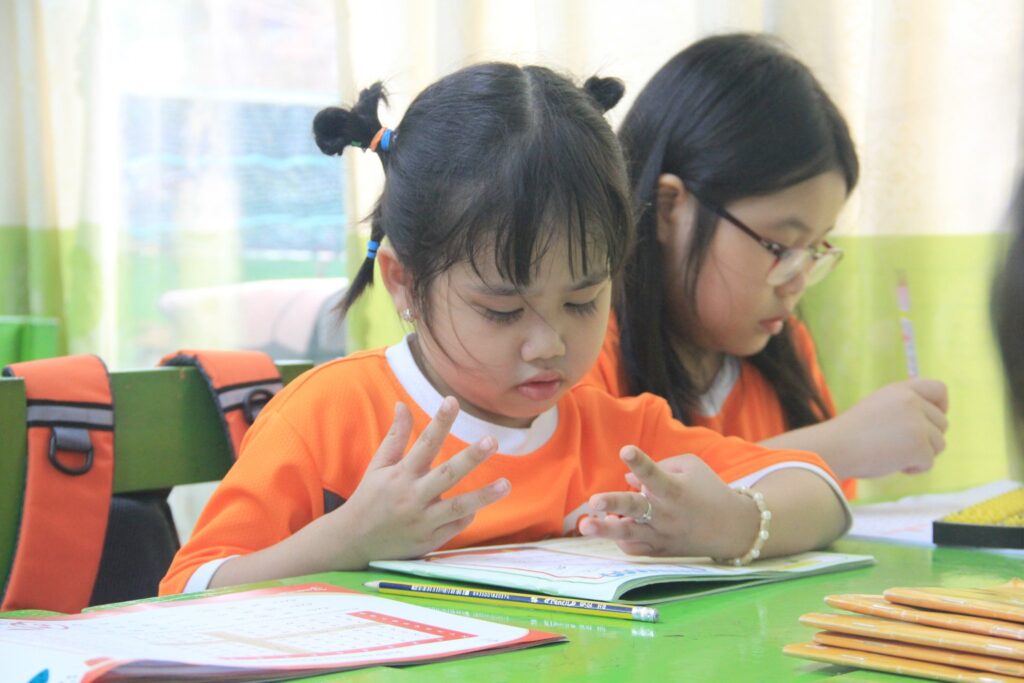
Keeping Young Minds on Track – Helping Children Learn Without Distractions
What Can Parents Do to Help Children Stay Focused?
1. Simplify the Study Space
A clean, uncluttered study corner—free from electronics or toys—minimizes distractions and keeps your child’s mind clear.
2. Break Tasks Into Smaller Steps
Instead of asking your child to sit for 45 minutes straight, divide study time into shorter sessions of 10–15 minutes. In between, let them stretch, walk around, or drink water. These short breaks recharge attention and improve memory.
3. Practice Through Games
Games like Simon Says, spot-the-difference, puzzles, or memory sequences are not just playtime—they are natural ways to strengthen attention skills in a fun, intentional way.
Understanding Comes Before Guiding
When a child loses focus, it may be a sign they’re tired, emotionally overwhelmed, or simply in need of a short break. Instead of scolding, try asking:
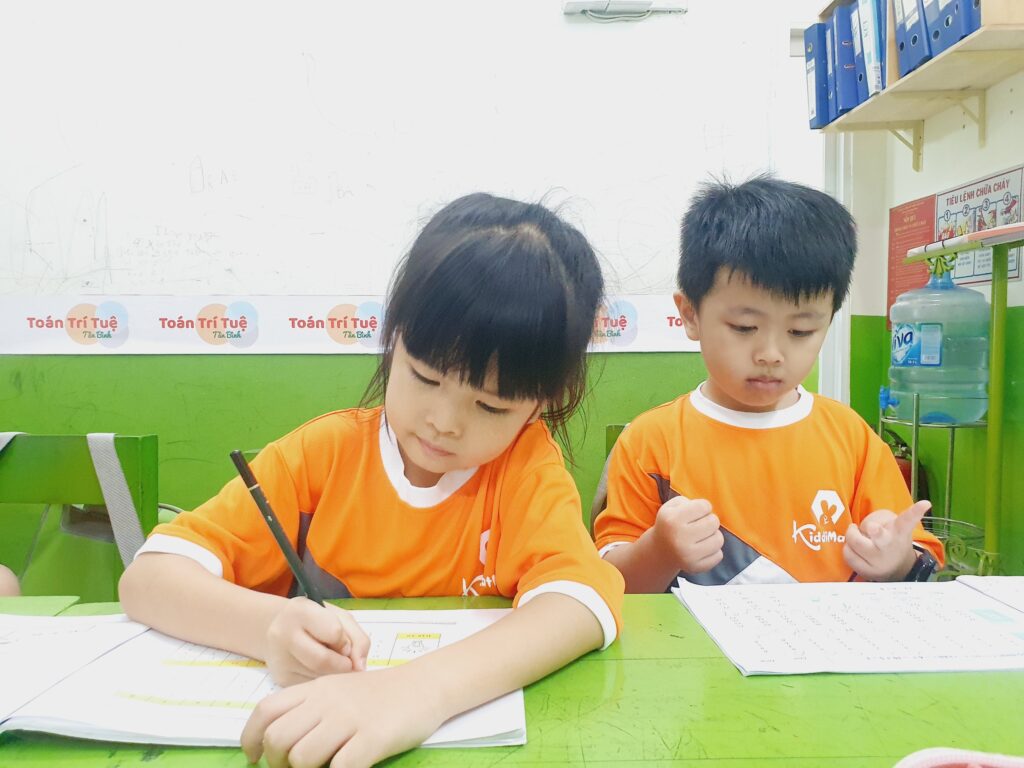
“Do you need help with something right now?”
References
Diamond, A. (2013). Executive functions. Annual Review of Psychology, 64(1), 135–168.
Harms, M. B., & Pollak, S. D. (2024). Emotion regulation. Encyclopedia of Adolescence, Second Edition.
Shonkoff, J. P., Duncan, G. J., Fisher, P. A., Magnuson, K., & Raver, C. (2011). Building the brain’s “air traffic control” system. Contract, 11, 1–17.
Stevens, C., & Bavelier, D. (2012). The role of selective attention on academic foundations. Developmental Cognitive Neuroscience, 2, S30–S48.