Throughout our journey supporting parents, KiddiMath often receives questions such as:
“FingerMath also uses fingers to count. So how is it different from the regular finger-counting method children use every day?”
This is a very common concern. In fact, FingerMath and traditional finger counting are fundamentally different — in their purpose, mechanisms, accuracy, and the cognitive benefits they bring to children.

Parents can click here to learn about: How to count using the FingerMath method versus traditional finger counting.
This article helps parents clearly understand the differences so they can choose the method that best supports their child.
1. What Is Regular Finger Counting?
Traditional finger counting is the natural method most children develop on their own:
- Each finger represents one unit, without any fixed rule (children can count from left to right or right to left).
- Children bend or extend fingers to show quantities.
- Suitable for simple and small numbers, usually 1–10. For numbers beyond 10–20, children often need counting sticks or additional support.
2. What Is FingerMath?
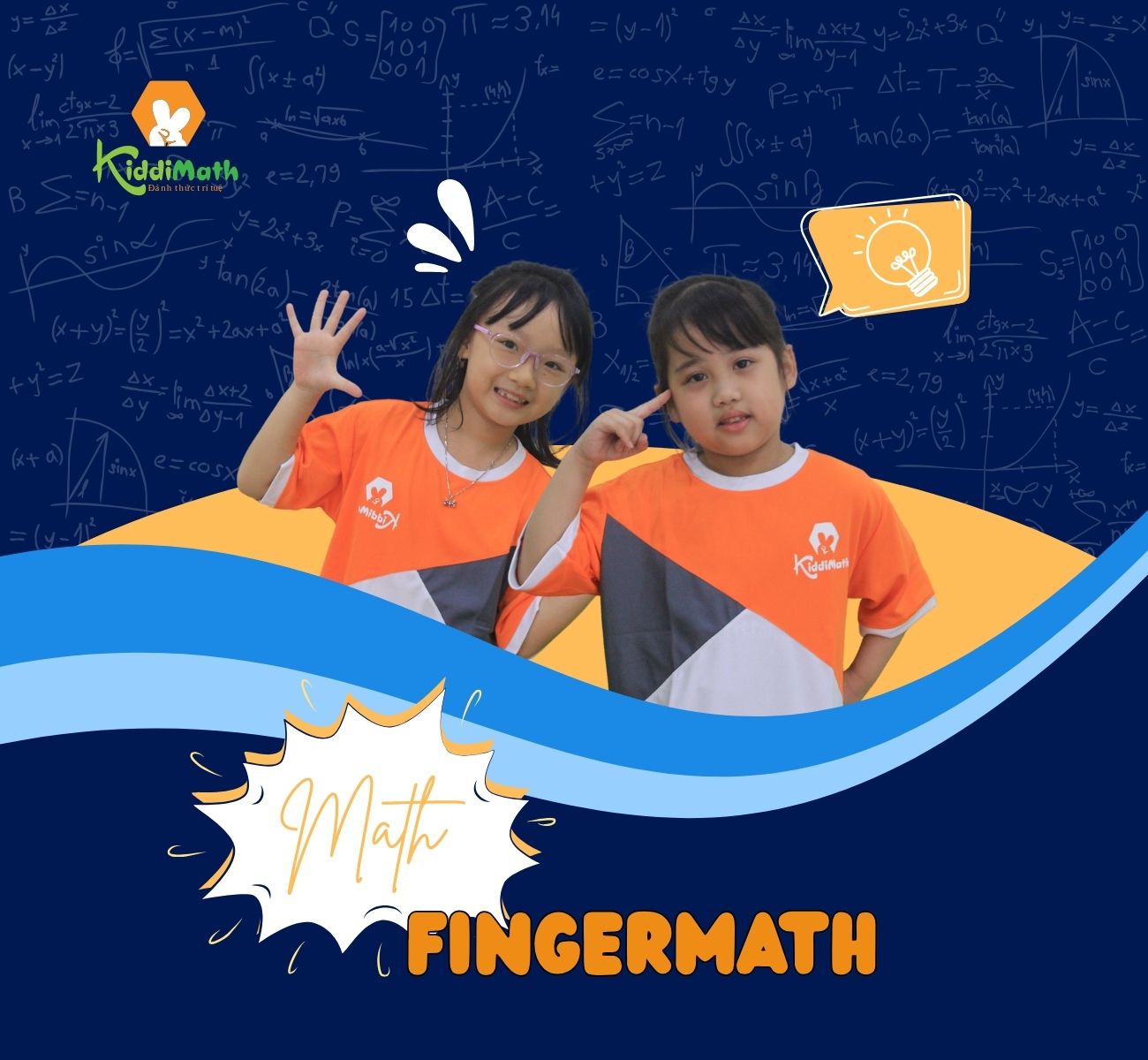
FingerMath is a method originating from Korea and is now widely used in math-thinking education for children ages 4–12.
Unlike regular finger counting, FingerMath applies a standardized system of rules for each finger on both hands, allowing children to count and calculate within 0–99 using only finger movements.
Key Features
- Each finger represents a specific value, not the number 1.
- The right hand represents units (0–9).
- The left hand represents tens (10–90).
- Children learn addition and subtraction within 0–99 through structured finger patterns.
3. Differences Between Regular Finger Counting and FingerMath
Both methods use fingers, but the purpose and structure are completely different.
| Criteria | Regular Finger Counting | FingerMath |
|---|---|---|
| Number range | 1–10 | 0–99 |
| Right hand | 1–5 | 0–9 |
| Left hand | 1–5 | 10–90 (tens) |
| Cognitive development | Minimal | Strong: focus, memory, reflexes |
| Suitable for | Preschool | Ages 4–12 |
| Skills developed | Quantity recognition | Visual thinking, memory, concentration, reflexes |
To clearly see the differences, you can refer to the two illustrations below:
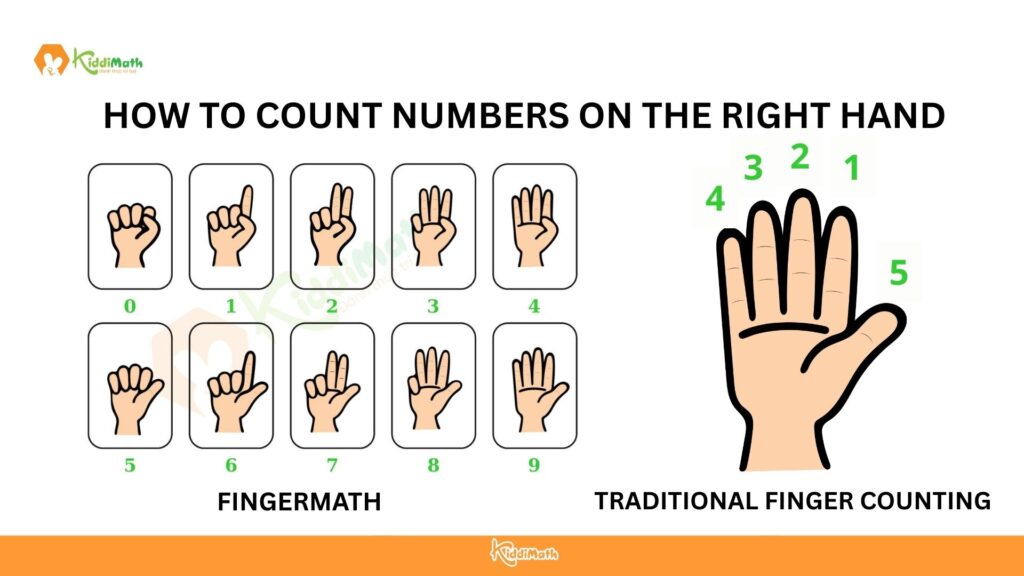
For example, both methods use the right hand to show numbers — but the values represented are completely different.
- Traditional method: Each finger = 1 unit (1–5), no fixed rule.
- FingerMath: Each finger represents a specific number from 0–9, helping children visualize numbers more effectively.
Similar to the way numbers are counted on the right hand, the counting method on the left hand works in the opposite way:
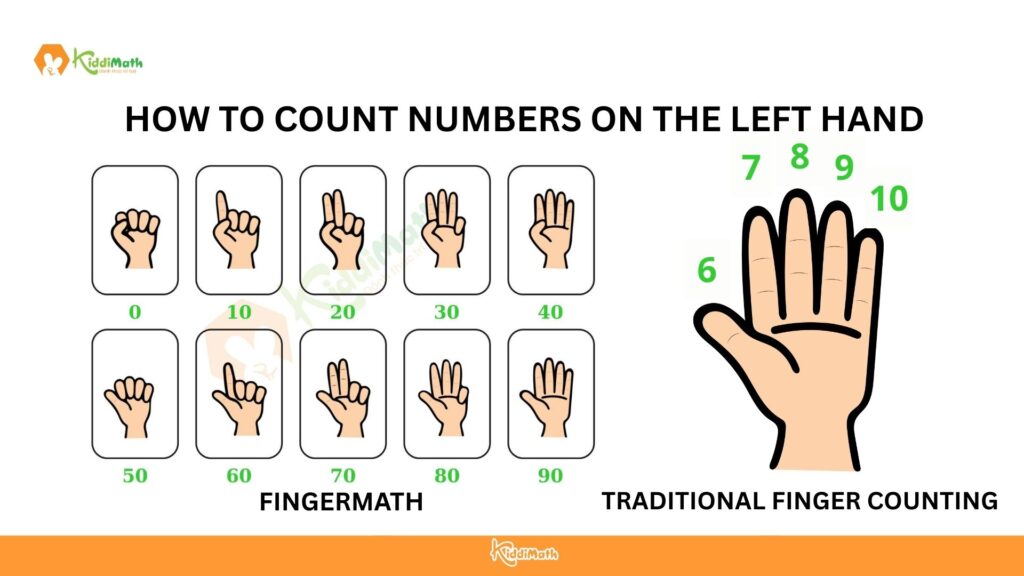
Therefore, each method has its own way of counting and its own set of rules. With the traditional counting method, children can only count from 1 to 10, and if they need to represent larger numbers, they must use additional counting tools such as sticks.
In contrast, with the FingerMath method, children can count from 0 to 99 using both hands according to its structured system of rules.
4. How Do KiddiMath Teachers Help Children Distinguish Between the Two?
A common concern from parents is:
“Will my child confuse FingerMath gestures with the way numbers are shown at school?”
At KiddiMath, teachers consistently explain and reinforce the differences between the two systems — especially important numbers like 5.
- FingerMath number 5 is shown using the thumb, following method-specific rules.
- School counting number 5 is simply shown with five fingers, without any formal structure.
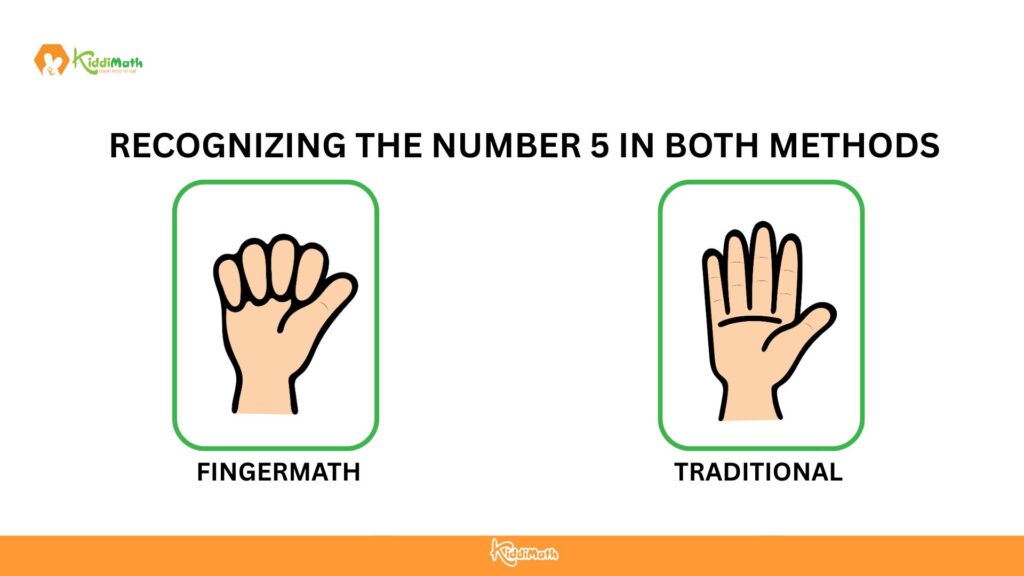
Teachers guide children to understand:
Each learning environment uses its own symbols, and the child simply applies the correct one in the correct context.
- At school, children use the familiar way of showing quantities from 1–10.
- At KiddiMath, children use FingerMath gestures based on structured rules.
Children are fully capable of distinguishing the two because FingerMath uses visual patterns and consistent rules, which do not overlap with regular counting — so confusion does not occur.
KiddiMath always supports children in understanding, applying, and using each method correctly — giving parents complete confidence when their child learns both.
Propose: What Is the FingerMath Method? How to Guide Your Child to Learn FingerMath at Home
An Intelligent Math Program for Children Aged 4–12, focusing on developing Focus – Memory – Reflex – Confidence through the FingerMath & Soroban methods.
Contact: 090.777.7607 (Ms. Ngoc Anh) – 028.3636.9774
Website: www.kiddimath.edu.vn
Address: 129 Bau Cat 1, Ward 14, Tan Binh District, Ho Chi Minh City