Parents today are increasingly interested in helping their children get familiar with mathematics from an early age. When learning about the FingerMath method, many parents often wonder how it differs from the traditional calculation methods children learn at school. As a result, they commonly ask:
-
“What makes FingerMath different from regular calculation methods?”
-
“Is the FingerMath method really necessary for children?”
-
“Should I let my child learn FingerMath?”
-
“Does FingerMath replace school mathematics?”
This article aims to help parents clearly understand the differences so they can choose the most suitable method for their child.

1. What is the traditional calculation method?
Traditional calculation is the method most of us learned in school from Grade 2 and onward:
-
Using pencil and paper to write out calculations.
-
Solving problems in vertical format—adding or subtracting by processing each column from right to left (ones, tens, hundreds), including carrying or borrowing when needed.
-
Heavily dependent on visual recognition, writing, and symbolic number thinking.
2. What is the FingerMath method?
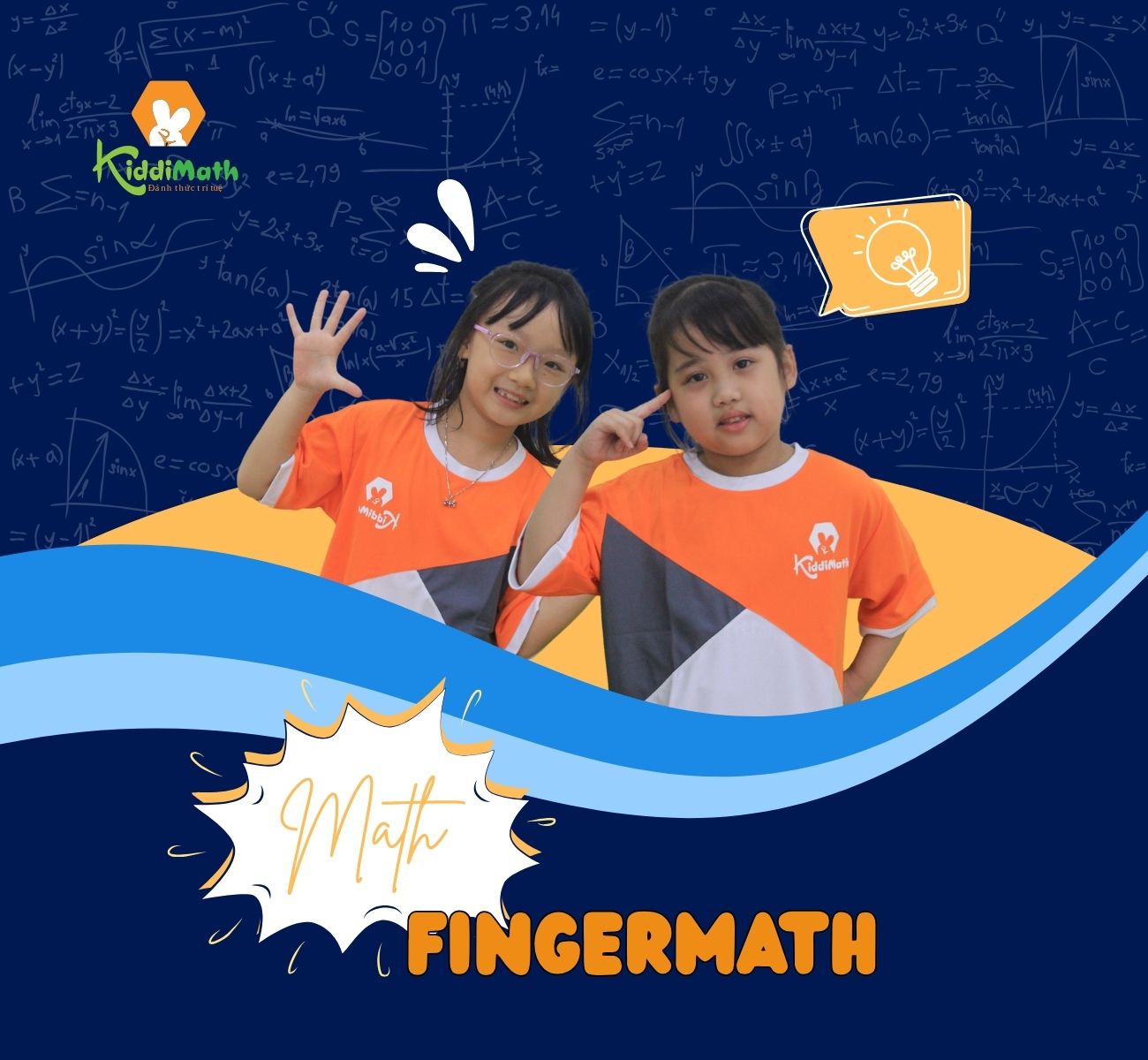
FingerMath is a method that develops mathematical thinking and essential learning skills through the use of the hands. The method teaches children to count using:
-
The right hand to represent the ones (0–9)
-
The left hand to represent the tens (10–90)
-
Fixed, structured rules for addition and subtraction
Children combine both hands to count within the range of 0–99. Once they master counting, they are guided to perform basic addition and subtraction within this range through coordinated finger movements.
3. Does FingerMath replace school mathematics?
A common concern among parents new to FingerMath is whether the method can help children “solve school math problems” or “replace the way math is taught at school.”
In reality, FingerMath does not replace traditional school math.
Instead, it is a skill–development method that uses math as a tool.
FingerMath is designed to help children strengthen:
-
Focus
-
Memory
-
Reaction speed
-
Confidence
It is not intended to cover the full range of problem types taught in the school curriculum. Therefore:
-
FingerMath cannot replace school mathematics.
-
FingerMath supports and enhances learning by giving children stronger foundational skills that help them learn math—and other subjects—more effectively.
When children can focus better, remember longer, respond faster, and confidently arrive at correct answers, their school math learning naturally becomes easier and less stressful.
4. Looking for a trusted place for your child to learn FingerMath?
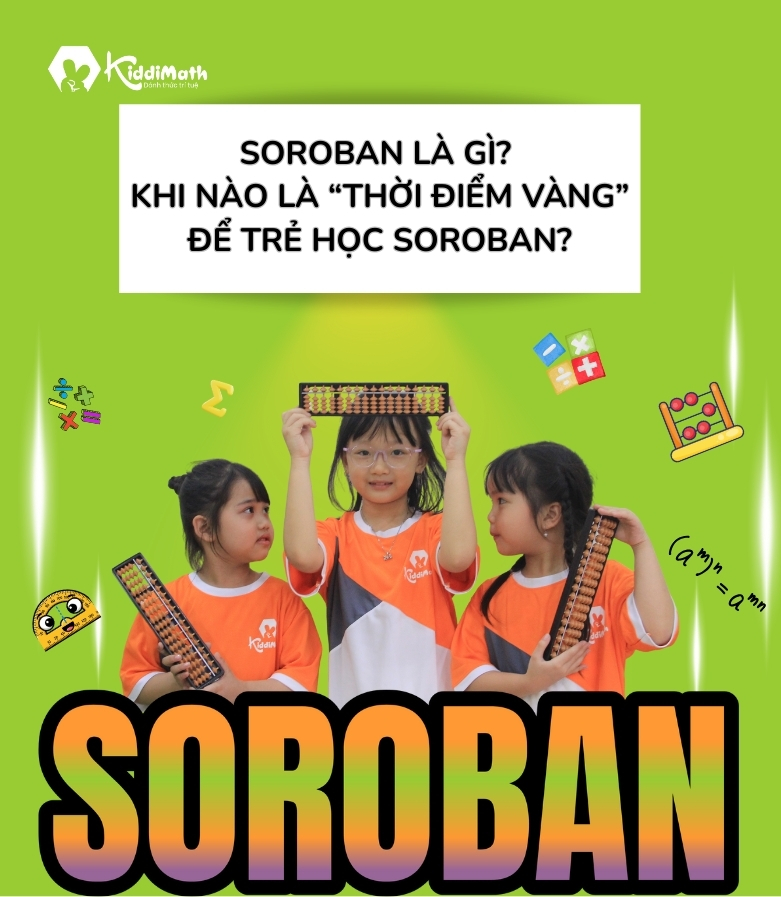
At KiddiMath, children learn both FingerMath (Korea) and Soroban (Japan)—two mental math methods that stimulate and develop both hemispheres of the brain. Math is simply a tool; the true goal is skill development.
KiddiMath is committed to helping children enhance four essential learning skills:
Focus – Memory – Reaction – Confidence
Here are some feedback highlights from parents who have trusted KiddiMath throughout their child’s learning journey.

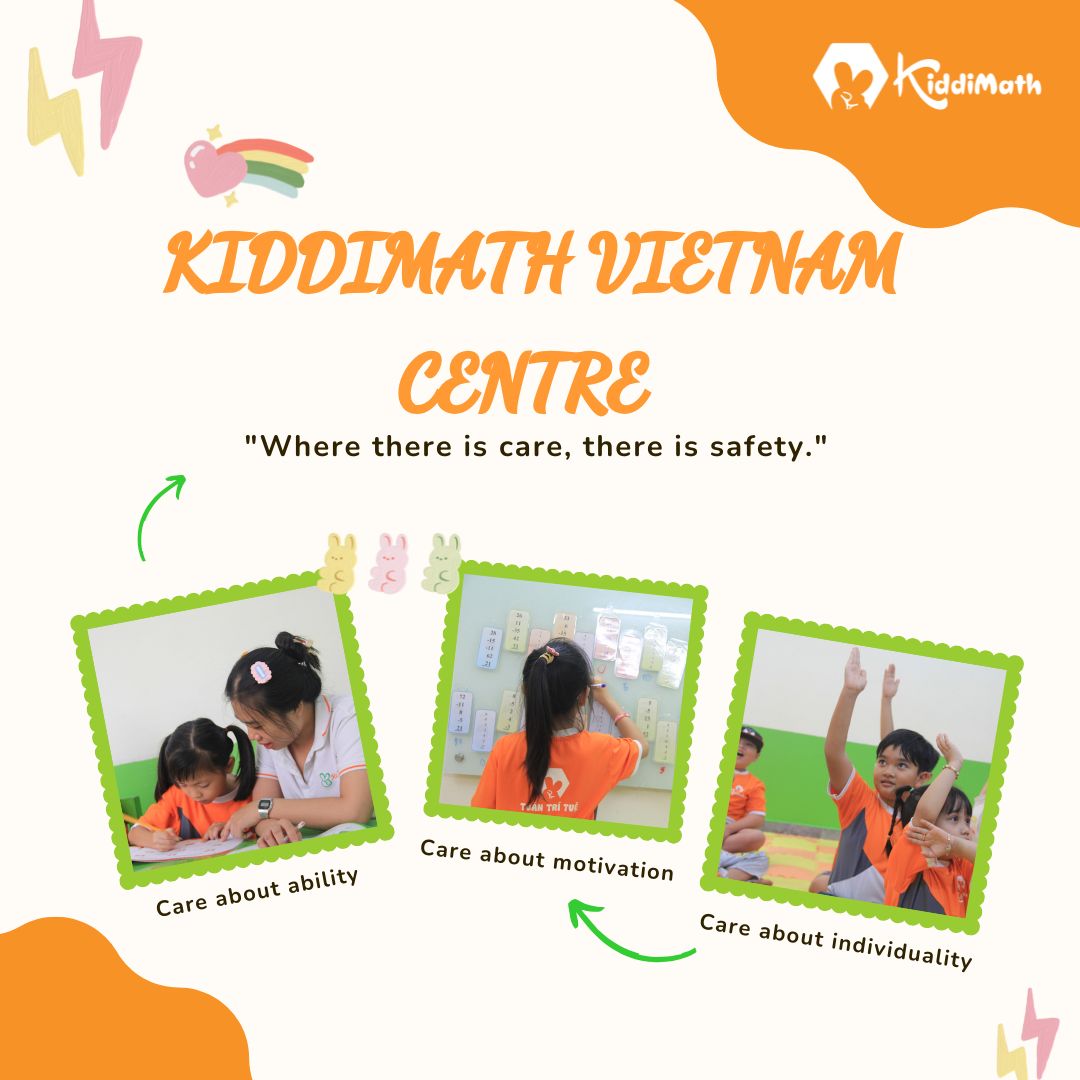
With a team of well-trained teachers, a friendly learning environment, and a comprehensive skill-development approach, KiddiMath is committed to accompanying parents in supporting their children’s growth during this golden stage.
An Intelligent Math Program for Children Aged 4–12, focusing on developing Focus – Memory – Reflex – Confidence through the FingerMath & Soroban methods.
Contact: 090.777.7607 (Ms. Ngoc Anh) – 028.3636.9774
Website: www.kiddimath.edu.vn
Address: 129 Bau Cat 1, Ward 14, Tan Binh District, Ho Chi Minh City